Want a meal that tastes like it came from a restaurant? This easy Mongolian beef recipe is your answer. It turns simple ingredients into a dish that’s both bold and tender. It’s sure to become a favorite in your kitchen.
No need for expensive takeout anymore. This recipe brings the restaurant to your home. With just a few ingredients and quick steps, you’ll make a dish that’s as good as any Chinese-American restaurant.
The secret to this recipe is its simplicity. Thinly sliced beef is cooked perfectly and then smothered in a rich, glossy sauce. This sauce combines sweet and savory flavors. You’ll be amazed at how good your homemade version tastes.
Whether you’re new to cooking or have years of experience, this recipe is for you. You’ll impress your family and friends with a meal that’s surprisingly easy to make.
Explore the world of a favorite dish in the United States. Mongolian beef, despite its name, comes from Taiwanese cuisine, not Mongolia.
An authentic Mongolian beef recipe has a surprising origin. It’s a mix of Asian and American flavors, loved by many.
Origins of Mongolian Beef
The story of Mongolian beef shows creativity in cooking. It was made in Taiwan in the 1950s. It was never a Mongolian dish but was created to please many tastes.
Originated in Taiwan, not Mongolia
Created in the 1950s
Designed for broad culinary appeal
Popularity in American Cuisine
Mongolian beef quickly became a hit in Chinese-American restaurants. Its sweet and savory sauce, with tender beef, won over diners fast.
Cuisine Type
Popularity Rating
Key Characteristics
Chinese-American
High
Sweet-savory sauce, tender beef
Asian Fusion
Very High
Adaptable, flavorful
“Mongolian beef represents the beautiful intersection of culinary innovation and cultural exchange.” – Food Historian
The dish’s flexibility and taste have made it a favorite across the country. It’s a top pick for those wanting an Asian-inspired meal.
Ingredients You'll Need
To make a real homemade Mongolian beef recipe, you need the right ingredients. They should give your dish strong flavors and the right texture. Knowing what each part does helps you make a meal as good as a restaurant’s.
Tender Cuts of Beef
Choosing the right beef is key for your Mongolian beef recipe. The best cuts are:
Flank steak (most recommended)
Sirloin steak
Skirt steak
These cuts are lean, tender, and great for quick stir-frying. Flank steak is the top pick for authentic taste and texture.
Sauces and Seasonings
Ingredient
Purpose
Soy Sauce
Base flavor and saltiness
Brown Sugar
Adds sweetness and caramelization
Oyster Sauce
Depth of umami flavor
Cornstarch
Thickens sauce and creates crispy beef coating
Fresh Vegetables
Fresh ingredients make your Mongolian beef recipe even better. Add:
Green onions
Minced garlic
Fresh ginger
Bell peppers
These veggies add crunch, color, and more flavor to your homemade Mongolian beef recipe.
Preparation Steps
Starting a simple Mongolian beef recipe requires careful preparation. You need to marinate the beef and prepare your vegetables. This ensures a tasty and authentic dish in just minutes.
Marinating the Beef: The Secret to Tender Meat
For a delicious Mongolian beef, tenderizing the beef is key. Use these ingredients to make your meat taste like it’s from a restaurant:
Baking soda (1/2 teaspoon)
Cornstarch (1 tablespoon)
Soy sauce (2 tablespoons)
Sesame oil (1 teaspoon)
The baking soda makes the beef tender. Pro tip: Let the meat marinate for 15-30 minutes for maximum flavor absorption.
Vegetable Preparation Techniques
Vegetable prep is as important as meat prep for a quick Mongolian beef recipe. Slice your veggies evenly for even cooking and a nice look:
Green onions: Cut into 2-inch pieces
Garlic: Mince finely
Bell peppers: Slice into thin strips
“Mise en place” is key – have all ingredients chopped and ready before you start cooking!
By following these steps, you’ll make a delicious Mongolian beef dinner. It will taste like it’s from a professional kitchen, and it will be ready fast.
Cooking Techniques
Learning to cook an easy Mongolian beef recipe is all about mastering some key techniques. The right way can make your dish go from good to great. You’ll get a meal that tastes like it came from a restaurant.
Stir-Frying Fundamentals
Stir-frying is the core of making the best Mongolian beef. It’s a fast method that needs focus and precision. You’ll use:
A heavy-bottomed wok or large skillet
High heat setting
Rapid, constant movement of ingredients
The Critical Role of High Heat
High heat is crucial for the perfect Mongolian beef texture. Intense heat gives a crispy outside and keeps the meat tender and juicy.
“The secret to great stir-fry is heat management and speed.” – Professional Chef
Here’s a quick guide to heat management:
Heat Level
Cooking Impact
Low Heat
Steams meat, loses crispiness
Medium Heat
Partial searing, uneven cooking
High Heat
Perfect sear, crispy exterior, tender interior
By learning these techniques, you’ll take your easy Mongolian beef recipe to the next level. Remember, the more you practice, the better you’ll get!
Creating the Savory Sauce
The heart of a great Mongolian beef recipe is its sauce. A homemade version turns simple ingredients into a flavor explosion that will excite your taste buds.
The sauce is a mix of sweet, salty, and aromatic flavors. It makes the whole dish special. Learning to make this sauce can turn a regular meal into a memorable experience.
Soy Sauce and Brown Sugar Harmony
The sauce starts with soy sauce and brown sugar. These two ingredients create the base flavor of your Mongolian beef.
Soy sauce adds deep umami and saltiness
Brown sugar brings a sweet, caramel-like taste
The right mix of these ingredients is key to the sauce’s balance
Garlic and Ginger Magic
Garlic and ginger are essential for adding depth to your sauce. They turn a simple mix into a complex, delicious sauce.
Ingredient
Flavor Contribution
Recommended Amount
Fresh Garlic
Intense, pungent flavor
2-3 minced cloves
Fresh Ginger
Warm, slightly spicy notes
1 tablespoon grated
Pro tip: Always use fresh garlic and ginger for the best flavors. Dried versions just can’t match the freshness of fresh ingredients.
Cooking Time and Temperature
Mastering the quick Mongolian beef recipe needs precision in cooking time and temperature. The right approach can make your simple Mongolian beef recipe amazing. Cooking beef perfectly is an art that requires attention to detail and careful technique.
Achieving the perfect Mongolian beef involves understanding two critical elements: heat and timing. Professional chefs know that temperature control makes all the difference in creating tender, flavorful meat.
Ideal Cooking Temperature for Beef
For an authentic quick Mongolian beef recipe, aim for a consistent heat of 350°F (176°C). This temperature provides several key benefits:
Creates a crispy exterior on the beef
Seals in natural meat juices
Prevents overcooking
Ensures even cooking throughout
Cooking Duration for Perfect Results
A simple Mongolian beef recipe typically requires short cooking times. Most home cooks can prepare this dish in just 10-12 minutes. Follow these guidelines for optimal results:
Stir-fry beef strips for 2-3 minutes per side
Maintain high heat throughout cooking
Watch for golden-brown edges
Remove from heat when beef reaches desired doneness
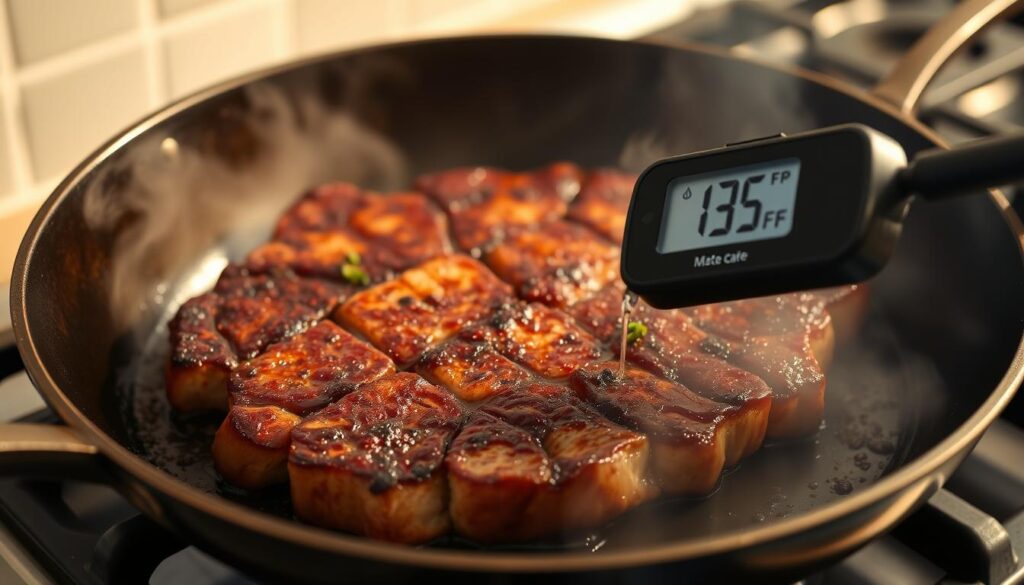
Pro tip: Use a meat thermometer to check internal temperature and ensure perfectly cooked beef every time.
How to Serve Mongolian Beef
Presenting your best Mongolian beef recipe is key. The right serving style can make a good dish great. When you prepare a traditional Mongolian beef recipe, how you present it is as important as the taste.
Traditional Sides to Consider
Authentic Mongolian beef is best with the right sides. Your dish will taste most authentic with these traditional sides:
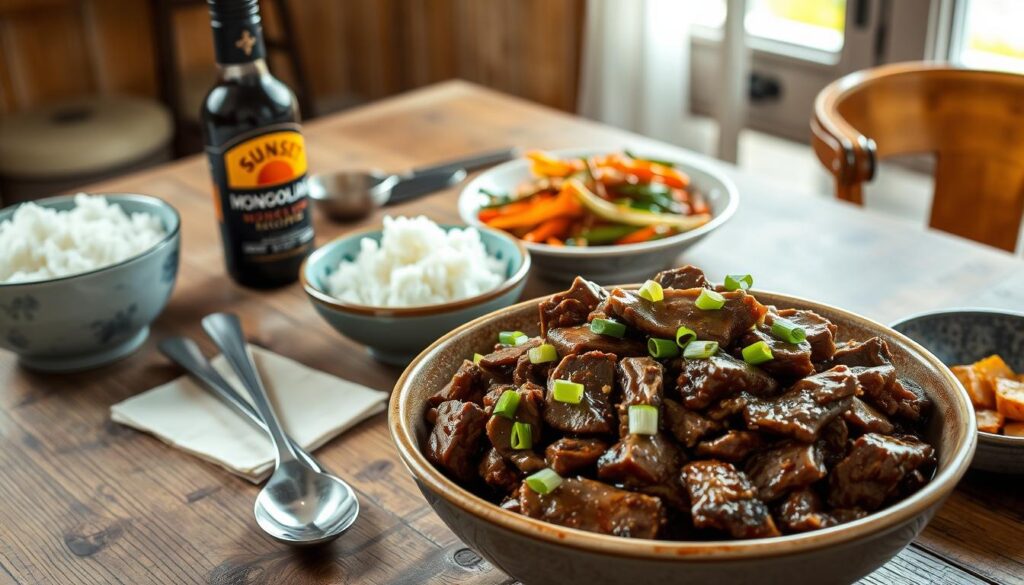
Steamed white rice
Jasmine rice
Brown rice
Cauliflower rice for low-carb options
Garnishing Tips
Make your homemade Mongolian beef stand out with simple garnishes. These small touches can greatly improve both looks and taste:
Green onions: Thinly sliced for a fresh, sharp accent
Toasted sesame seeds
Crispy fried garlic chips
Chopped cilantro
Pro tip: Add garnishes just before serving to keep their texture and look. The best Mongolian beef recipes always focus on these final touches.
Storing Leftovers
Keeping your easy Mongolian beef recipe fresh is key for enjoying tasty meals later. The right storage keeps your homemade Mongolian beef delicious for days.
Best Practices for Refrigeration
Here are important tips for storing your Mongolian beef:
Cool the beef completely before storing
Use airtight containers to prevent moisture loss
Separate meat from sauce if possible
Store in the refrigerator within two hours of cooking
Your leftover Mongolian beef can stay in the fridge for up to 5 days. Make sure the container is sealed and in the coldest fridge spot. This keeps the taste and texture great.
Freezing Techniques for Long-Term Storage
Freezing is a great way to keep your Mongolian beef recipe longer. Here are some tips:
Use freezer-safe containers or heavy-duty freezer bags
Remove as much air as possible before sealing
Label containers with the date of storage
Freeze for up to 3 months
To thaw your frozen Mongolian beef, let it thaw in the fridge overnight. Then, reheat it gently in a skillet or microwave. Add a bit of water or sauce to keep it moist.
Variations of Mongolian Beef
Trying out different Mongolian beef recipes can make cooking more exciting. This classic dish can be adapted in many ways. It suits various tastes and dietary needs.
Don’t think traditional Mongolian beef is the only option. You can also try spicy versions or use different proteins. These changes can make the dish even more enjoyable.
Vegetarian Protein Alternatives
If you prefer plant-based options, here are some tasty choices:
Tofu: Firm tofu is great, mimicking beef’s texture
Seitan: A wheat-based protein that soaks up flavors well
Portobello mushrooms: They have a meaty feel and a deep flavor
Exploring Different Protein Options
Authentic Mongolian beef can also be made with other proteins. Here are some tasty alternatives:
Chicken: It’s lighter but just as tasty
Pork: It adds a richer flavor
Lamb: It brings a bold, unique taste
When you swap proteins, adjust cooking times and marinade strength. This ensures the best taste and texture. Each protein will change how the sauce interacts with it, offering a new taste experience.
Pairing Suggestions
Improving your traditional Mongolian beef recipe is more than just mastering cooking. The right sides and drinks can make your meal unforgettable. Choosing the best side dishes and drinks will bring out the rich flavors of your Mongolian beef.
Finding the perfect rice is key for a great meal. Here are some rice options that pair well with Mongolian beef:
Jasmine rice: Delicate and fragrant
Long-grain white rice: Light and fluffy texture
Basmati rice: Aromatic and slightly nutty
Perfect Rice Pairings
Jasmine rice is the best choice for your Mongolian beef. Its floral taste and soft texture soak up the savory sauce. This creates a perfect mix of flavors.
Wine and Beverage Recommendations
Choosing the right drink can make your Mongolian beef meal even better. Here are some drink options:
Red Wines:
Zinfandel: Fruity and bold
Pinot Noir: Light and smooth
Beer Options:
Light lagers
Amber ales
If you prefer not to drink alcohol, try green tea or sparkling water with lemon. It cleanses your palate between bites of your Mongolian beef.
Tips for Perfecting Your Recipe
Making the perfect easy Mongolian beef recipe takes skill and focus. Whether you’re making a classic or spicy version, a few key techniques can make your dish stand out. These tips will help you go from good to great in your home cooking.
Mastering Beef Preparation
To get tender, flavorful Mongolian beef, start with the right meat and prep. Here are some essential tips:
Choose lean cuts like flank steak or sirloin for the best texture
Slice beef against the grain for maximum tenderness
Use a sharp knife to create uniform, thin slices
Pat meat dry before cooking to ensure proper searing
Managing Spice and Heat Levels
When making a spicy Mongolian beef recipe, you can adjust the heat to your liking. Here’s how to do it:
Start with small amounts of chili sauce or red pepper flakes
Taste and add more heat gradually
Use fresh or dried chilies for controlled spiciness
Balance the heat with sweet ingredients like brown sugar
Avoiding Common Cooking Mistakes
Professional chefs know that technique is key. To avoid tough meat and dull flavor, remember:
Keep the heat high during stir-frying
Don’t overcrowd the pan
Cook beef quickly to keep it moist
Let meat rest briefly before serving
Pro tip: A well-seasoned wok or cast-iron skillet can make your easy Mongolian beef recipe truly special.
Conclusion: Enjoy Your Homemade Mongolian Beef!
Making your own Mongolian beef at home turns a simple dinner into a special treat. You get to choose every ingredient, flavor, and nutrition aspect. It’s incredibly rewarding to make a meal as good as a restaurant’s in your own kitchen.
With your own Mongolian beef recipe, you can try new things every time. Want it spicier? Use leaner meat? Add different veggies? The fun never ends. Each dish you make helps you get better at balancing flavors.
Cooking is all about trying new things and having fun. Feel free to change up the recipe with spices, different meats, or sides. Soon, your Mongolian beef will be a hit with your family, beating any takeout.
Start your cooking adventure, share your dishes with friends and family, and enjoy every bite of your homemade Mongolian beef. Your kitchen is now a place where you can make amazing, authentic food that delights your taste buds.
FAQ
What cut of beef is best for Mongolian beef?
Flank steak or sirloin are top choices for Mongolian beef. They’re lean and tender, making the dish flavorful. Choose meat with little fat for the best taste.
How can I make my Mongolian beef less sweet?
Cut down on brown sugar in the sauce to lessen sweetness. Adding more soy sauce or rice vinegar can also balance it. This makes the dish more savory.
Is Mongolian beef spicy?
Mongolian beef isn’t usually spicy. But, you can add red pepper flakes, sriracha, or chili peppers for heat. The sauce is mostly sweet and savory.
Can I make Mongolian beef ahead of time?
You can prep parts of Mongolian beef early. Marinate the beef and chop veggies the day before. But, cook it just before serving for the best texture.
What are the best side dishes to serve with Mongolian beef?
Serve it with steamed rice, brown rice, or noodles. Stir-fried veggies like broccoli or bell peppers add nutrition and make it a full meal.
How do I prevent the beef from becoming tough?
Cook quickly with high heat and slice thinly against the grain. Avoid overcooking. Marinating with baking soda or cornstarch also helps keep it tender.
Is this recipe gluten-free?
The traditional recipe isn’t gluten-free because of soy sauce. But, you can make it gluten-free by using tamari or gluten-free soy sauce. Make sure all ingredients are gluten-free certified.
How long can I store leftover Mongolian beef?
Store it in the fridge for 3-4 days in an airtight container. Reheat with a bit of water or sauce to keep it moist.
Can I use a different protein instead of beef?
Yes! Try chicken, tofu, seitan, or pork. Adjust cooking times to ensure it’s fully cooked. This keeps the sauce’s flavor.
What’s the difference between restaurant and homemade Mongolian beef?
Homemade Mongolian beef lets you control ingredients and flavors. You use fresher ingredients and can tailor it to your taste. It’s healthier and more customizable than restaurant versions.